
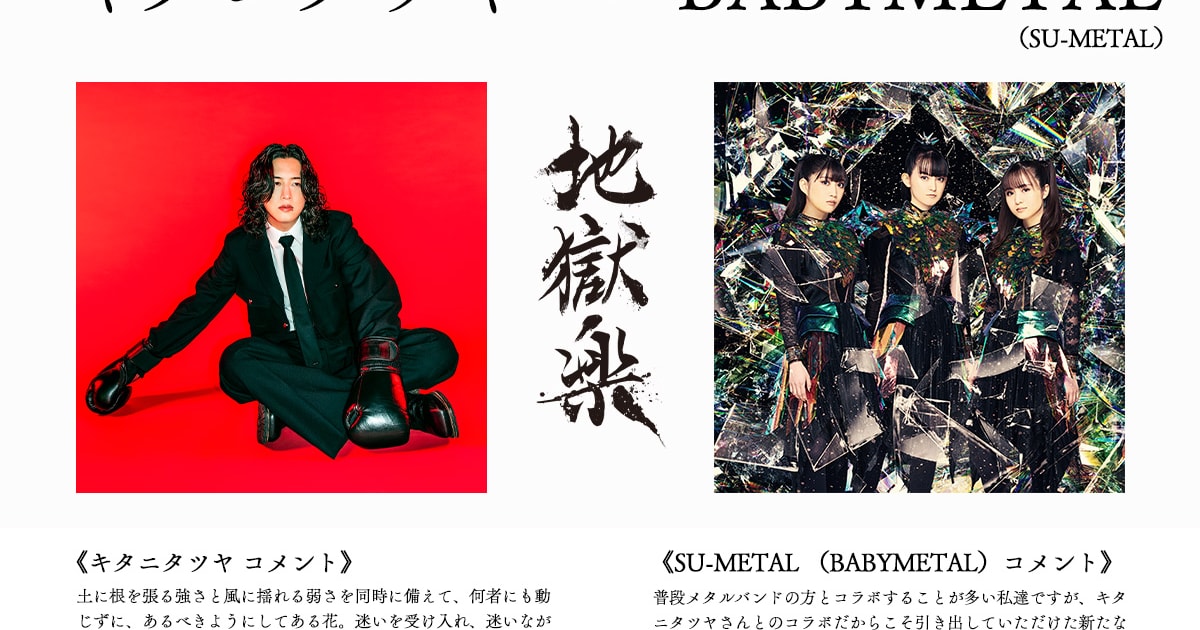
Kitani Tatsuya x BABYMETAL: A Stunning Anime Collaboration
Imagine a haunting melody cutting through the dark, intense world of a historical ninja anime, blending the raw power of metal with the soulful depth of alternative rock. If you’ve ever been captivated by Japanese music or anime, you’re in for a treat with the latest news: singer-songwriter キタニタツヤ (Kitani Tatsuya) has teamed up with the iconic metal band BABYMETAL (Beibīmetaru) for a groundbreaking new track. Announced on December 20, 2025, their song かすかなはな (Kasukana Hana - "Faint Flower") will be the opening theme for the second season of the TV anime 地獄楽 (Jigokuraku - "Hell’s Paradise"), premiering on January 11, 2026. This collaboration isn’t just music—it’s a cultural moment that bridges emotional storytelling with genre-defying creativity. Let’s dive into what makes this partnership so exciting and what you can learn from it as a Japanese language enthusiast.
The Powerhouse Duo: Kitani Tatsuya and BABYMETAL
At the core of this buzz is the unexpected yet thrilling コラボ (korabo - collaboration) between two distinct forces in Japanese music. キタニタツヤ (Kitani Tatsuya), born in 1996, is a versatile artist who’s been shaking up Japan’s music scene since 2014. Starting as an online creator, he’s grown into a major label star with hits like 青のすみか (Ao no Sumika - "Blue Haven"), the opening theme for the wildly popular anime 呪術廻戦 (Jujutsu Kaisen). His music often carries deep, personal themes, making every 楽曲 (gakkyoku - musical piece) feel like a story of its own.
On the other side, we have BABYMETAL, a global phenomenon that’s been redefining music since 2010 by fusing the cute, bubbly world of J-pop with the intense, head-banging energy of heavy metal. Their unique style has earned them legions of fans worldwide, and their participation in this project—often described as a フィーチャリング (fīcharingu - featuring) role—brings a fresh dynamic to the track. SU-METAL, a key member of BABYMETAL, shared that かすかなはな (Kasukana Hana) reflects a 凛 (rin - dignified, graceful) image of a blooming flower, symbolizing the beauty and value of existence. Together, Kitani and BABYMETAL have crafted a song that’s both powerful and fragile, much like the themes of the anime it represents.
Hell’s Paradise: A Dark Canvas for a Poetic Song
If you’re new to 地獄楽 (Jigokuraku - "Hell’s Paradise"), get ready for a gripping tale. This dark historical manga by Yuji Kaku, adapted into an anime in 2023, follows 画眉丸 (Gabimaru), a once-feared ninja who becomes a prisoner after trying to escape his violent past. Set in Edo-period Japan with supernatural twists, the story is often called a 忍法浪漫 (ninpō rōman - "ninja romance") for its blend of brutal action and emotional depth. With its 放送 (hōsō - broadcast) set for January 2026, Season 2 promises even more intensity, and the オープニングテーマ (ōpuningutēma - opening theme) has been decided as かすかなはな (Kasukana Hana), perfectly mirroring the protagonist’s inner struggles. Kitani himself described the song as a metaphor for 自己実現 (jiko jitsugen - self-realization), capturing the balance of strength and vulnerability.
Cultural Context: Anime Themes and Musical Innovation
In Japan, anime opening themes aren’t just catchy tunes—they’re cultural touchstones. A well-chosen オープニングテーマ (ōpuningutēma) can define an anime’s identity and even become a chart-topping hit. Artists like Kitani Tatsuya often pour their hearts into creating music that resonates with the story’s emotional core, a practice that reflects Japan’s deep appreciation for synergy between sound and narrative. This isn’t something you’ll find explained in most Western textbooks, but it’s how Japanese media often works, layering meaning in ways that feel natural to native audiences.
Then there’s BABYMETAL, a band that embodies Japan’s knack for blending tradition with innovation. By mixing the cute, idol-driven aesthetic of J-pop with the raw aggression of metal, they’ve carved out a unique space in global music culture. Their role in this collaboration highlights how Japanese artists aren’t afraid to experiment, much like how the Japanese language itself often conveys complex emotions through subtle nuances and context. For learners like you, this project is a window into understanding not just words, but the cultural layers behind them.
Learn Japanese from This Article
Ready to pick up some authentic Japanese from this exciting news? Here, we’ve gathered key vocabulary and grammar points that reflect how language is used in real Japanese media and conversations. Let’s break it down the way native speakers learn—through context and practical use.
Key Vocabulary
| Japanese | Romaji | Meaning |
|---|---|---|
| コラボ | korabo | collaboration |
| オープニングテーマ | ōpuningutēma | opening theme |
| フィーチャリング | fīcharingu | featuring (guest artist) |
| 凛 | rin | dignified, graceful, stern |
| 楽曲 | gakkyoku | musical piece, song |
| 放送 | hōsō | broadcast |
| 自己実現 | jiko jitsugen | self-realization |
These words pop up often in discussions about music and media in Japan. For instance, コラボ (korabo) is a casual term you’ll hear everywhere, from anime tie-ups to fashion partnerships. Meanwhile, a word like 凛 (rin) carries a poetic weight, often used to describe someone or something with a quiet, dignified strength—perfect for the imagery in かすかなはな (Kasukana Hana).
Grammar Spotlight
Let’s focus on two useful grammar patterns that capture the style of Japanese announcements and reflections in this news piece.
1. 〜に決定した (~ni kettei shita): Has been decided as ~
This structure is commonly used in formal announcements to indicate a final decision, often in media or business contexts.
- Structure: [Option/Choice] + に + 決定した (has been decided)
- Example 1: この曲がオープニングテーマに決定した。 (Kono kyoku ga ōpuningutēma ni kettei shita.
- This song has been decided as the opening theme.)
- Example 2: 放送日が1月11日に決定した。 (Hōsōbi ga ichigatsu jūichinichi ni kettei shita.
- The broadcast date has been decided as January 11.)
- Usage: You’ll see this in news articles or official statements to confirm something finalized. It’s polite and direct, fitting for professional settings.
2. 〜ながら (~nagara): While doing ~, Although doing ~
This pattern expresses two actions happening at the same time or a contrast between two ideas, often with a reflective tone.
- Structure: [Verb stem] + ながら + [Second action/idea]
- Example 1: 音楽を聴きながらアニメを見る。 (Ongaku o kikinagara anime o miru.
- I watch anime while listening to music.)
- Example 2: 強いながらも壊れやすい花をイメージした。 (Tsuyoinagara mo kowareyasui hana o imēji shita.
- I imagined a flower that is strong while also being fragile.)
- Usage: It’s a natural way to describe simultaneous actions or to add depth to a statement, like in Kitani’s metaphor for the song. It’s conversational yet expressive.
Useful Expressions
Here’s a quick phrase inspired by the themes of self-discovery in 地獄楽 (Jigokuraku) and the song’s message:
- 自分を見つける (Jibun o mitsukeru
- To find oneself)
- Example: アニメを見ながら自分を見つけることができた。 (Anime o minagara jibun o mitsukeru koto ga dekita.
- I was able to find myself while watching anime.)
- This ties into the idea of 自己実現 (jiko jitsugen
- self-realization) and is a heartfelt way to talk about personal growth, something many Japanese stories emphasize.
- Example: アニメを見ながら自分を見つけることができた。 (Anime o minagara jibun o mitsukeru koto ga dekita.
- To find oneself)
By practicing these words and patterns, you’re not just memorizing—you’re stepping into the way Japanese is used to express creativity and emotion in real contexts.
Closing Thoughts
This collaboration between キタニタツヤ (Kitani Tatsuya) and BABYMETAL (Beibīmetaru) for 地獄楽 (Jigokuraku) is more than just a song—it’s a fusion of music, storytelling, and cultural expression that shows why Japanese media captivates the world. As you learn Japanese, moments like these remind you that language isn’t just grammar or vocab; it’s a doorway to understanding emotions, history, and innovation. Keep exploring, and you’ll find your own かすかなはな (Kasukana Hana - "Faint Flower")—a small, precious insight into Japan’s heart.
これからもよろしくお願いします。 Kore kara mo yoroshiku onegaishimasu.