
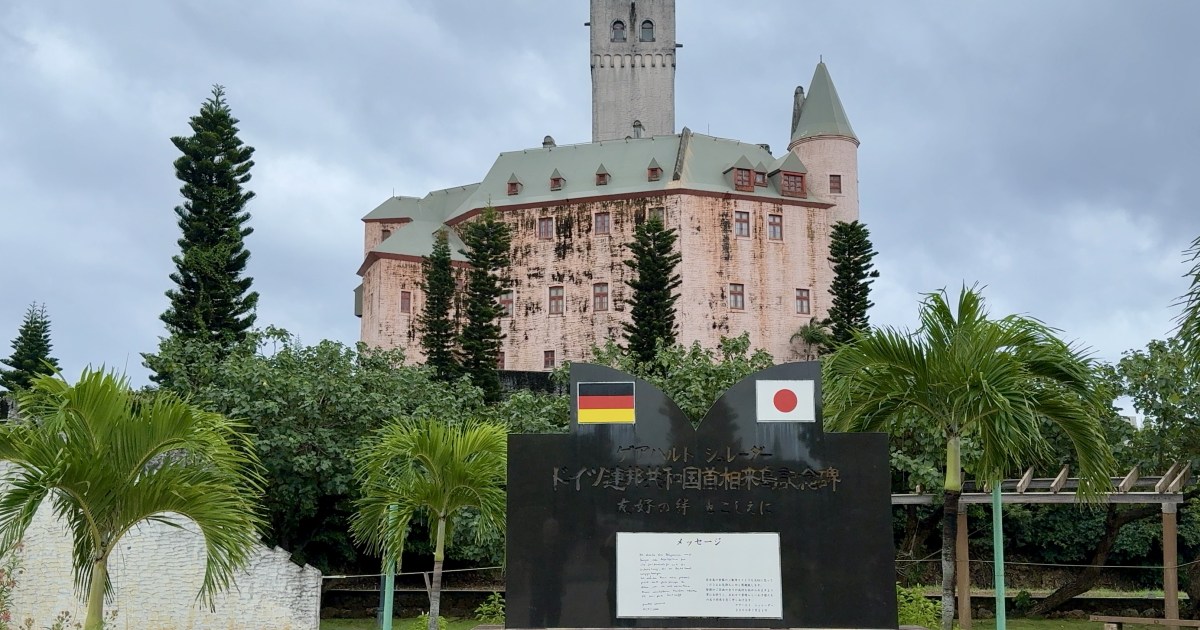
Why Is There a German Castle on a Tropical Japanese Island?
Have you ever pictured yourself stumbling upon a medieval European castle while wandering through a tropical paradise in Japan? If you’re learning Japanese and eager to uncover the hidden layers of Japan’s history and culture, let me take you on an unexpected journey to 宮古島 (Miyakojima), a breathtaking island in Okinawa Prefecture. Amidst turquoise seas and lush jungles, you’ll find a surprising gem: うえのドイツ文化村 (Ueno Doitsu Bunka Mura), or Ueno German Culture Village. This isn’t just a random tourist spot—it’s a portal into a fascinating slice of Japanese history and a testament to how global connections shape local identity. Let’s dive in and explore why there’s a German castle on a Japanese island!
Discovering Ueno German Culture Village
Nestled along the southern coast of Miyakojima within the expansive Sigira Seven Miles Resort, stands a structure that feels completely out of place against the tropical backdrop—a European-style castle. Known as うえのドイツ文化村 (Ueno Doitsu Bunka Mura), this site often appears in online searches for Miyakojima attractions, but detailed information about what’s inside or what visitors can experience is surprisingly hard to come by. Many reviews simply mention “taking a walk around the grounds,” leaving its true nature a bit of a mystery. So, what is this place, and what can you expect if you visit?
The village offers several 施設 (shisetsu, facilities), and wandering the grounds is free, with seasonal events occasionally hosted there. The centerpiece is a replica of Germany’s Marksburg Castle, which houses the 博愛記念館 (Hakuai Kinenkan), or Philanthropy Memorial Hall, a paid museum with an 入場料 (nyuujouryou, admission fee) of 750 yen for adults and 400 yen for children. From the outside, the castle’s weathered look—thanks to Okinawa’s salty sea breezes and humid climate—might make it 古そうに見える (furusou ni mieru, seem old or worn out). But step inside, and you’re welcomed by a grand, well-maintained entrance hall with high ceilings, stone walls, and modern amenities like barrier-free access.
As you explore the museum, starting from the top-floor observation deck with stunning views of the surrounding ocean, you’ll descend through floors packed with 展示 (tenji, exhibitions) on German culture and history. From displays on beer and food culture (think bread and sausages aplenty) to life-sized 再現 (saigen, recreations) of 1900s farm kitchens, the museum offers a vivid glimpse into German life. Highlights include full-scale replicas of rooms from Marksburg Castle, like the “Knights’ Hall” and “Ladies’ Room,” complete with canopy beds and massive fireplaces. One quirky detail? A medieval toilet—a primitive seat jutting out over a cliff, with waste dropping straight to the ground below. It’s the kind of unexpected touch that makes history feel alive.
The Surprising History Behind the Village
Now, you might be wondering: why build a German culture village on a remote Japanese island surrounded by 自然 (shizen, nature)? It’s not just a random theme park from Japan’s bubble economy era. The story dates back to 1873, during the Meiji period, when a German merchant ship, the R.J. Robertson, ran aground off the coast near where the village stands today. Local fishermen heroically rescued the crew, an act of kindness rooted in the spirit of 博愛 (hakuai, philanthropy or universal love), which earned deep gratitude from the German emperor at the time. Decades later, in 1929, a monument commemorating this event was rediscovered, and the story of this selfless act became a celebrated tale, even featured in Japanese textbooks.
文化交流のために (bunka kouryu no tame ni, in order to foster cultural exchange), うえのドイツ文化村 was established. With official permission from Germany, the Marksburg Castle was meticulously recreated life-sized using original blueprints. The area’s connection to this story is evident in nearby names like 博愛漁港 (Hakuai Gyokō), or Philanthropy Fishing Port, and シュレーダー通り (Shurēdā Dōri), or Schröder Street, named after the German Chancellor who visited during the 2000 Okinawa Summit. The 博愛記念館 isn’t just a museum—it’s a tribute to a moment of human connection that transcended borders.
Cultural Context: A Blend of Histories
For many English speakers, the idea of a German village in tropical Okinawa might seem bizarre, but it reflects Japan’s deep appreciation for historical ties and cultural exchange. The concept of 博愛 (hakuai, philanthropy) is central to this story and resonates with Japanese values of community and mutual support. Additionally, Okinawa’s unique position as a cultural crossroads—distinct from mainland Japan due to its history as the Ryukyu Kingdom—often leads to surprising blends of influences, whether it’s American military bases or, in this case, a German castle. Understanding these layers helps you see how Japanese identity often weaves in global stories while staying rooted in local pride.
This site also showcases Japan’s approach to 観光 (kankou, tourism or sightseeing), where historical narratives are preserved through immersive experiences like museums, even in unexpected places. If you’re used to thinking of Okinawa as just beaches and nature, うえのドイツ文化村 reveals how history and storytelling are just as much a part of the island’s charm.
Learn Japanese from This Article
If you’re diving into Japanese the way it’s taught in Japan, exploring real-world stories like this one is a fantastic way to build your skills. Let’s break down some key vocabulary and grammar from this unique tale of Miyakojima’s German connection. These words and patterns will help you talk about travel, history, and culture—perfect for your next conversation with a native speaker!
Key Vocabulary
Here are some essential words tied to this story that you’ll hear often when discussing tourism or cultural sites in Japan:
| Japanese | Romaji | Meaning |
|---|---|---|
| 自然 | shizen | nature |
| 観光 | kankou | tourism, sightseeing |
| 施設 | shisetsu | facility, institution |
| 入場料 | nyuujouryou | admission fee |
| 展示 | tenji | exhibition, display |
| 再現 | saigen | reproduction, recreation |
| 博愛 | hakuai | philanthropy, universal love |
Grammar Spotlight: 〜そうだ (Seems Like) and 〜ために (In Order To)
Let’s look at two useful grammar patterns that popped up in this story. These are commonly used in everyday Japanese and will help you describe impressions or explain purposes—key skills for natural conversation.
〜そうだ: Seems Like, Looks Like
This pattern is used to describe something based on appearance or hearsay, often translated as “seems like” or “looks like.” It’s attached to the stem form of a verb or the root of an adjective.
- Structure: Verb (stem) + そうだ / Adjective (root) + そうだ
- Examples:
- この城は古そうですね。(Kono shiro wa furusou desu ne.) - This castle looks old, doesn’t it?
- 博物館は面白そうだ。(Hakubutsukan wa omoshirosou da.) - The museum seems interesting.
- 彼は疲れそうだ。(Kare wa tsukaresou da.) - He looks tired.
Use this when you’re making an observation based on what you see or hear. It’s a great way to sound thoughtful or speculative in Japanese!
〜ために: In Order To, For the Sake Of
This pattern expresses purpose or reason, often translated as “in order to” or “for the sake of.” It’s used with nouns or verbs (dictionary form) to explain why something is done.
- Structure: Verb (dictionary form) + ために / Noun + のために
- Examples:
- 文化交流のためにこの村が作られました。(Bunka kouryu no tame ni kono mura ga tsukuraremashita.) - This village was built in order to foster cultural exchange.
- 歴史を学ぶために博物館に行きます。(Rekishi o manabu tame ni hakubutsukan ni ikimasu.) - I’m going to the museum to learn about history.
- 子供のために頑張ります。(Kodomo no tame ni ganbarimasu.) - I’ll do my best for the sake of my children.
This is a versatile pattern for explaining intentions or goals, often used in formal or purposeful contexts.
Useful Expression
Here’s a handy phrase tied to visiting cultural sites like this one:
- 入場料はいくらですか? (Nyuujouryou wa ikura desu ka?) - How much is the admission fee? Use this when you’re at a museum, theme park, or any paid attraction in Japan. It’s polite and practical!
Closing Thoughts
Exploring うえのドイツ文化村 isn’t just a quirky detour on your Miyakojima trip—it’s a chance to see how Japan cherishes its historical connections and weaves them into modern 観光 (kankou, tourism). As you learn Japanese the authentic way, stories like this remind you that language isn’t just about words; it’s about understanding the heart of a culture. Keep diving into these hidden gems, and you’ll find your Japanese skills growing alongside your appreciation for Japan’s unique identity.
これからもよろしくお願いします。 Kore kara mo yoroshiku onegaishimasu.