
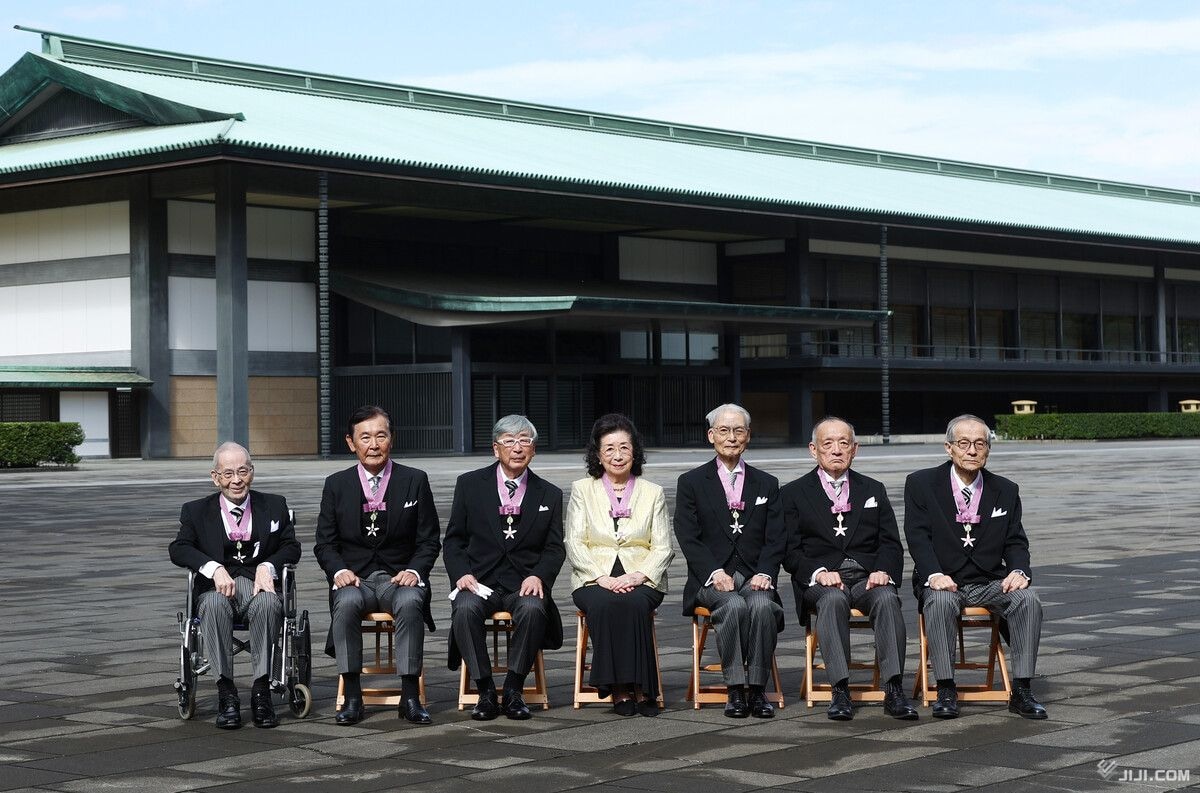
On November 3, the 文化の日 (Bunka no Hi, Culture Day) ceremony for the Order of Culture was held at the 皇居 (Koukyo, the Imperial Palace). Seven people, including Tokyo University of Science professor emeritus Kenzo Suhai, 76, whose Nobel Prize in Chemistry has been decided, attended and received their 勲章 (kunshou, decorations) directly from the Emperor.
According to Jiji, the Emperor told the recipients, “I sincerely find it delightful that you have made long efforts over many years, achieved great accomplishments, and contributed to the advancement of culture.” The wording was highly formal, fitting a ceremony that honors major cultural and academic achievements.
Who attended the ceremony
The other 受章者 (jushousha, recipients) were lighting designer Motoko Ishii, 88; architect Toyo Ito, 85; biological scientist Tsuneyoshi Kuroiwa, 84; French literature scholar Tetsuya Shiokawa, 81; composer and former Commissioner for Cultural Affairs Shinichi Tokura, 78; and immunologist Shigekazu Nagata, 77.
Shigeru Miyamoto, 73, Nintendo representative director and fellow known for the popular “Super Mario” series and other games, was absent. In Japanese, that is 欠席 (kesseki), meaning not attending.
What the recipients said afterward
After the ceremony, the seven recipients held a 記者会見 (kisha kaiken, press conference). Suhai said that when he received the medal, he strongly felt “the long and weighty history” of Japan. Looking ahead to the Nobel Prize in Chemistry award ceremony in December, he said he wanted to attend while carrying that 栄誉 (eiyo, honor).
Tokura spoke in a 感慨深げ (kangai fukage, deeply moved) way, saying that he felt he had received the award as a representative of the distinguished predecessors he respects.
Learn Japanese from This Article
Vocabulary
| Japanese | Romaji | Meaning |
|---|---|---|
| 文化の日 | Bunka no Hi | Culture Day |
| 皇居 | Koukyo | the Imperial Palace |
| 勲章 | kunshou | decoration; medal |
| 受章者 | jushousha | recipient of an order or decoration |
| 欠席 | kesseki | absence; not attending |
| 記者会見 | kisha kaiken | press conference |
| 栄誉 | eiyo | honor; distinction |
| 感慨深げ | kangai fukage | looking deeply moved; with deep emotion |
Grammar Spotlight
〜に向けて
Meaning: toward; in preparation for; with an eye to
From the article: 12月のノーベル化学賞授賞式に向けて「栄誉を背負って臨みたい」と述べた。 Juunigatsu no Nooberu kagakushou jushoushiki ni mukete “eiyo o seotte nozomitai” to nobeta. “He said that toward the Nobel Prize in Chemistry award ceremony in December, he wanted to attend while carrying that honor.”
Example: 試験に向けて毎日勉強しています。 Shiken ni mukete mainichi benkyou shite imasu. “I study every day in preparation for the exam.”
Example: 大会に向けてチームが練習を続けています。 Taikai ni mukete chiimu ga renshuu o tsudzukete imasu. “The team is continuing practice toward the tournament.”
How to use it: 〜に向けて marks a goal or upcoming event and shows preparation in that direction.
〜ことを誠に喜ばしく思います
Meaning: I sincerely find it delightful that...; a very formal way to express pleasure about a fact
From the article: 長年努力を重ね、大きな業績を収められ、文化の向上に尽くしてこられたことを誠に喜ばしく思います。 Nagannen doryoku o kasane, ookina gyouseki o osamerare, bunka no koujou ni tsukushite korareta koto o makoto ni yorokobashiku omoimasu. “I sincerely find it delightful that you have made long efforts over many years, achieved great accomplishments, and contributed to the advancement of culture.”
Example: 皆さんが無事に卒業されたことを誠に喜ばしく思います。 Minasan ga buji ni sotsugyou sareta koto o makoto ni yorokobashiku omoimasu. “I sincerely find it delightful that you all graduated safely.”
Example: このような成果を上げられたことを誠に喜ばしく思います。 Kono you na seika o agerareta koto o makoto ni yorokobashiku omoimasu. “I sincerely find it delightful that you achieved results like these.”
How to use it: This expression is very formal and is used in speeches, ceremonies, and official remarks.
Useful Expressions
文化勲章親授式 Bunka Kunshou shinju-shiki “the ceremony where the Emperor personally presents the Order of Culture”
歴史をひしひしと感じた rekishi o hishihishito kanjita “felt history very strongly”
栄誉を背負って臨みたい eiyo o seotte nozomitai “I want to face it carrying this honor”
これからもよろしくお願いします。 Kore kara mo yoroshiku onegaishimasu.