
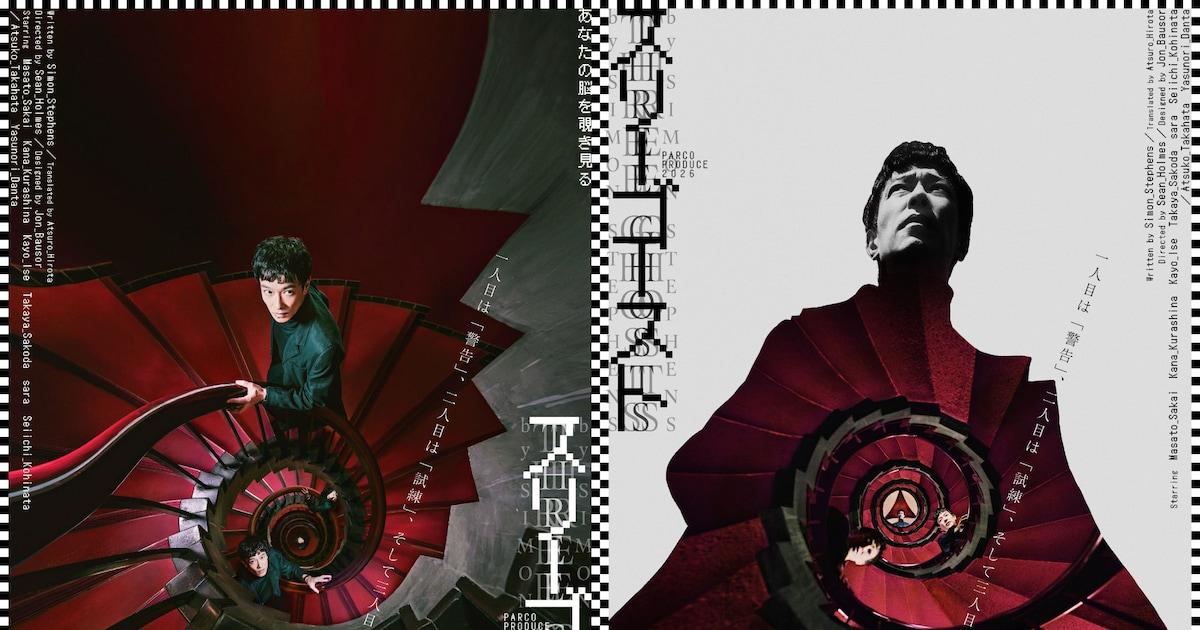
On June 26, 2026, new details were revealed for the stage play 「スリーゴースト」 (Surī Gōsuto / “Three Ghosts”), starring Sakai Masato. The production’s あらすじ (arasuji, plot summary), visuals, and performance schedule were officially announced—along with comments from the playwright, director, and cast.
This marks Sakai’s return to the stage for the first time in 17 years.
A Story About Dreams, Memory, and Technology
PARCO Produce 2026’s 「スリーゴースト」 features Sakai Masato in the 主演 (shuen, starring role). He 主演を務める (shuen o tsutomeru), meaning he “serves as the lead actor,” playing a man named Joe.
The play centers on a dream gadget called “LeapMind,” a device that digitalizes and recreates the dreams people see. Joe becomes fascinated with its possibilities and 情熱を抱く (jōnetsu o idaku, to have passion for) the project. As an advertising agent deeply involved with LeapMind, he tries to 勝ち取る (kachitoru, to win through effort) a promotional contract.
Recently unveiled (お披露目, ohirōme) visuals show a striking spiral staircase alongside Sakai. Another image suggests the other characters emerging from within Joe’s memories. Designer Shinichi Kōno explained his こだわり (kodawari, attention to detail): the spiral staircase represents descending into the depths of one’s own brain in search of hidden memories—especially painful memories about ourselves or loved ones that we try to forget.
By placing two spiral images side by side—one viewed from above and one from below—the design aims to evoke the image of an opening eye, symbolizing memories awakening through LeapMind.
A Personal and Social Ghost Story
Playwright Simon Stephens shared that being asked by PARCO and Gorch Brothers to write a new play was a great honor. For him (彼にとって, kare ni totte), this work is deeply personal.
He expressed a strong desire to write about Tokyo. While developing the script, he walked extensively through the city with friends and colleagues, visiting places meaningful to them. Through their eyes, he came to feel even closer to Tokyo.
The play also reflects his admiration for filmmakers Ozu and Kurosawa, as well as literary figures Matsuo Bashō and Mishima Yukio. These cultural references connect the work to Japan’s artistic history while exploring thoroughly modern themes.
Stephens describes the play as a story about the fragility and possibilities of love and marriage in the digital age. It examines how humans live amid both the fear and potential brought by technological revolution. And, as the title suggests, it is also a ghost story—one where the dead continue to live alongside us wherever we go.
Director and Cast: High Expectations
Director Sean Holmes said he feels great excitement about bringing this beautiful and powerful script to life on stage. This production marks another collaboration with Simon Stephens and his third time working in Tokyo with acclaimed actor Danda Yasunosuke.
Sakai Masato commented that Stephens’ world has a “mysterious gravity,” combining dreamlike floating sensations with a deep sense of nostalgia. He described the strange feeling of not knowing whether one is climbing or descending a spiral staircase—remembering or creating.
He also expressed his 意気込み (ikigomi, enthusiasm and determination): although surrounded by a cast of highly respected actors such as Takahata Atsuko and Danda Yasunosuke, he is ready to learn from them as he returns to the stage after 17 years.
Performance Schedule
“Three Ghosts” will be performed:
- October 6–27: Tokyo (PARCO Theater)
- November 6–8: Okayama
- November 12–23: Osaka
- November 27–29: Aichi
- December 3–6: Miyazaki
- December 10–13: Fukuoka
General ticket sales for the Tokyo performances begin on September 5.
If you’re studying Japanese, notice how dates are written simply with numbers and counters like 10月6日から27日まで (jū-gatsu muika kara nijūshichi-nichi made, from October 6 to 27). There’s no verb tense change—just clear time markers.
Cultural Context: Ghosts and Memory in Japan
Ghost stories, or 怪談 (kaidan, ghost tales), have long been part of Japanese culture. From classical literature to kabuki theater, spirits often represent unresolved emotions—regret, love, guilt.
“Three Ghosts” connects that tradition with modern digital technology. Instead of spirits appearing in old houses, memories themselves become the “ghosts,” awakened by a futuristic device. This blend of past and future reflects a uniquely Japanese sensibility: respecting tradition while engaging cutting-edge innovation.
Learn Japanese from This Article
Key Vocabulary
| Japanese | Romaji | Meaning |
|---|---|---|
| 主演 | shuen | starring role |
| あらすじ | arasuji | plot summary |
| 併せて | awase te | at the same time; together with |
| 情熱を抱く | jōnetsu o idaku | to have passion for |
| 勝ち取る | kachitoru | to win; to earn through effort |
| お披露目 | ohirōme | official unveiling |
| こだわり | kodawari | careful attention to detail |
| 意気込み | ikigomi | enthusiasm; determination |
Grammar Spotlight
1. 〜を務める (to serve as; to play the role of)
Structure: [Role] + を務める
Example:
主演を務める。 Shuen o tsutomeru. To serve as the lead actor.
司会を務める。 Shikai o tsutomeru. To serve as the host.
This expression is commonly used in formal contexts like news articles.
2. 〜にとって (for; from the perspective of)
Structure: [Person] + にとって + statement
Example:
私にとって特別な作品です。 Watashi ni totte tokubetsu na sakuhin desu. It’s a special work for me.
彼にとって大きな名誉でした。 Kare ni totte ōkina meiyo deshita. It was a great honor for him.
This pattern expresses personal significance or viewpoint.
Useful Expression
- 17年ぶりの舞台です。 Jū-nana-nen buri no butai desu. It’s my first stage performance in 17 years.
The pattern 〜年ぶり (~nen buri) means “for the first time in ~ years.”
Continue Learning
To understand more about 時間 expressions like 10月6日から27日まで, explore our Time and Dates: Tense-Free Expressions lesson.
The world of 「スリーゴースト」 blends memory, technology, love, and tradition—offering not only a compelling story but also rich language for you to explore.
これからもよろしくお願いします。 Kore kara mo yoroshiku onegaishimasu.