
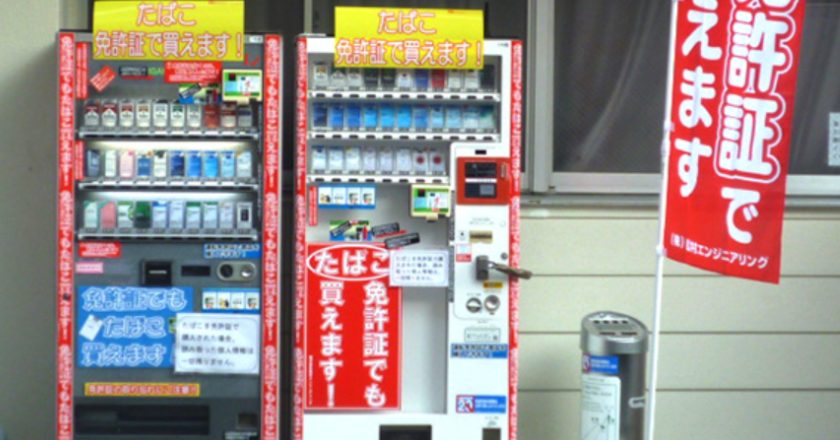
On March 31, 2026, NTT Docomo’s 3G network FOMA officially shuts down. And along with it, another piece of everyday Japanese technology disappears: the cigarette vending machine age-verification card taspo.
Introduced in 2008, taspo ends its 18-year run on the same day the 回線 (kaisen, communication line) it relied on goes dark.
Why taspo Is Ending
The shutdown comes FOMA終了に伴い (FOMA shuuryō ni tomonai) — “due to the end of FOMA.”
The adult identification システム (shisutemu, system) used by taspo relied on the FOMA 3G network for communication during age verification. Once that network stops operating, the system can no longer function.
Taspo began in 2008 as a way to prevent minors from purchasing cigarettes at vending machines. After verifying a user’s identity documents, an organization would issue a contactless ICカード (aishii kaado, IC card) called a taspo card.
Users simply held the card over the cigarette vending machine, and after age authentication, they could make a purchase. Communication for this authentication process used the FOMA 回線 (kaisen).
From April 1 onward, taspo cards will no longer work.
The Decline of Cigarette Vending Machines
Cigarette vending machines were once everywhere in Japan. At their peak in 2002, there were approximately 630,000 machines nationwide.
By 2024, that number had dropped by about 90%.
Today, most people buy cigarettes at convenience stores (コンビニ, konbini), where staff can check ID directly. As purchasing habits shifted, the need for standalone vending machine authentication systems decreased as well.
What Happens After April 1?
Even after taspo stops functioning, vending machines will still physically accept coins and bills.
To prevent customers from accidentally inserting cash into non-functioning machines, the Japan Tobacco Association and related groups are calling on retailers to unplug the machines — pulling the コンセント (konsento, electrical plug) — or switch the internal power lever to オフ (ofu, off).
In other words, they are asking stores to take action 現金を入れてしまわないようにするために (genkin o irete shimawanai yō ni suru tame ni) — “so that customers do not mistakenly insert cash.”
Is There a Replacement?
There are vending machines that can verify age using the IC chip in a driver’s license or Japan’s My Number card. However, according to the report, their 普及 (fukyuu, spread or adoption) has not progressed significantly.
For stores that wish to continue operating cigarette vending machines, they must install devices certified by the Ministry of Finance that use My Number cards or driver’s licenses for age verification. But widespread adoption has yet to occur.
Taspo’s official website and past ニュースリリース (nyuusu ririisu, press releases) from NTT Docomo document the system’s launch and technical background — now part of Japan’s recent tech history.
Cultural Context: Technology and Regulation in Japan
Japan has long been known for its dense network of vending machines, selling everything from drinks to batteries — and cigarettes.
However, strict regulations aim to prevent underage smoking. The taspo system reflected a uniquely Japanese solution: combining vending machine culture with digital ID technology.
Its reliance on a specific mobile 回線 (kaisen) also shows how interconnected Japan’s tech infrastructure can be. When a telecom standard ends, unexpected services can disappear along with it.
Learn Japanese from This Article
Key Vocabulary
| Japanese | Romaji | Meaning |
|---|---|---|
| 回線 | kaisen | communication line, network |
| システム | shisutemu | system |
| ICカード | aishii kaado | IC card |
| ニュースリリース | nyuusu ririisu | press release |
| コンセント | konsento | electrical outlet, plug |
| オフ | ofu | off (power off) |
| 普及 | fukyuu | spread, adoption |
Notice how many of these are written in katakana. They are loanwords adapted into Japanese pronunciation — an essential skill for reading modern tech news.
Grammar Spotlight ①: 〜に伴い
Structure: Noun + に伴い
Meaning: “due to,” “as a result of,” “accompanying” (formal, often used in news)
Example from the article:
- FOMAの終了に伴い、taspoも終了する。 FOMA no shuuryō ni tomonai, taspo mo shuuryō suru. Due to the end of FOMA, taspo will also end.
This expression appears frequently in news reports and official announcements.
Grammar Spotlight ②: 〜ように(する/なる)
Structure: Verb (plain form) + ようにする Verb (plain form) + ようになる
Meaning: “to make sure that…,” “so that…,” or “to come to…”
Example from the article context:
- 現金を入れてしまわないようにする。 Genkin o irete shimawanai yō ni suru. To make sure people do not accidentally insert cash.
This pattern is extremely useful for expressing purpose and prevention.
Useful Expression
- 幕を閉じる(まくをとじる) maku o tojiru “To close the curtain” → to come to an end
The article says taspo ends after about 18 years with this expression — a slightly dramatic way to describe the end of a long chapter.
Continue Learning
Working on your reading skills? Our Katakana Essentials: Adapting Global Words to Japanese lesson is a great next step.
Want to learn more about tech? Check out our lesson on Basic Vocabulary Building: Embracing Words Without Latin Ties.
Want to learn more about tech? Check out our lesson on Reading and Writing in Japanese II: Hiragana and Katakana.
A telecom network shuts down. An IC card disappears. And a once-common sight on Japanese streets quietly fades away.
By reading stories like this, you're not just learning vocabulary — you're understanding how language, technology, and culture connect in real life.
これからもよろしくお願いします。 Kore kara mo yoroshiku onegaishimasu.