
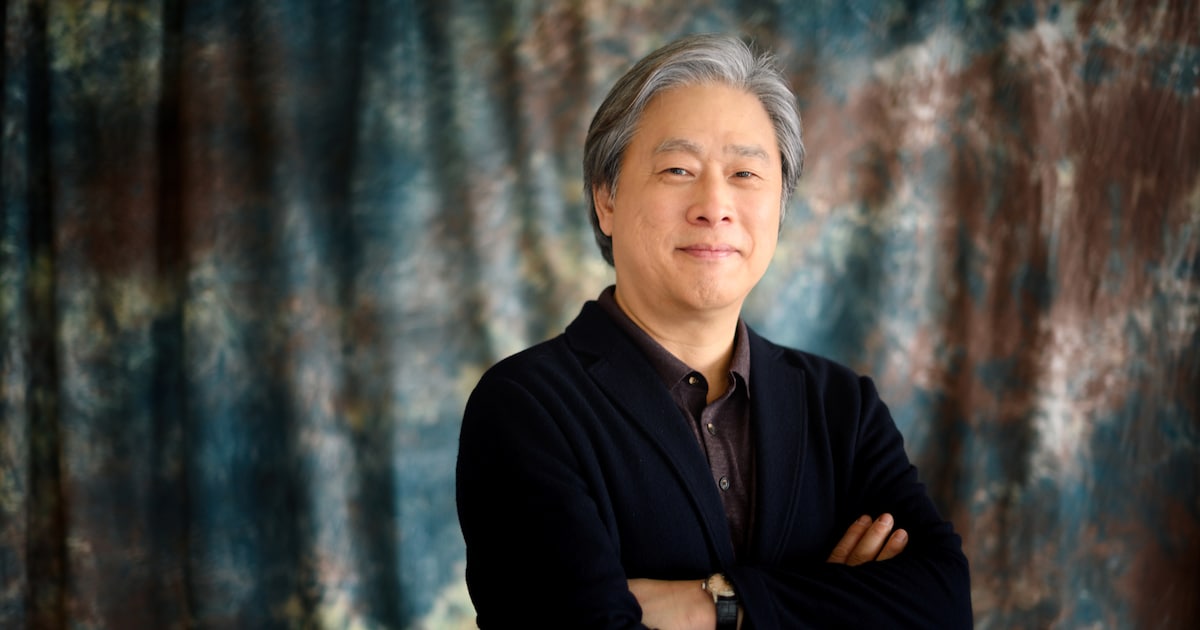
On March 7, 2026, director Park Chan-wook appeared at a joint press event for the Korean film A Happy Choice (「しあわせな選択」), where he spoke passionately about the story’s universal themes—and made a bold statement about the future of cinema: “AI will absolutely never surpass actors.”
A “Universal” Story 20 Years in the Making
The film is based on Donald E. Westlake’s novel The Ax, a book Park fell in love with about 20 years ago. He had long planned to adapt it into a movie.
He explained that he had already written and rewritten the script multiple times, traveled to Canada and New York for location scouting, and even created storyboards. Rather than saying he “never lost passion,” he admitted something more practical: he had invested so much sincerity and effort that it simply felt wasteful to give up.
At international film festivals, he would tell friends about the project. Many responded that the story sounded compelling—and that audiences in their own countries would likely relate to it. Through these conversations, Park became convinced of the story’s 普遍性 (fuhensei)—its universality.
A Man Who Loses Everything
The protagonist, Man-su, has worked 堅実 (kenjitsu, steadily and reliably) for 25 years at a paper manufacturing company. He lives in a large suburban home and appears to have an “ideal” life.
Then one day, he is suddenly 解雇 (kaiko)—fired.
After failing at 再就職 (saishuushoku, finding a new job), Man-su reaches a disturbing conclusion: if his rivals disappear, he can secure a job. From there, he makes a life-changing decision.
Lee Byung-hun plays Man-su, and Son Ye-jin plays his wife.
Park highlighted a particularly powerful subplot: Man-su’s son gets into trouble and is taken to the police. As a father, Man-su tries to solve the situation. Earlier, after losing his job, he had also lost his 自己肯定感 (jikokouteikan, self-esteem). But through a certain “choice,” he regains confidence.
In a heartbreaking and darkly ironic scene, Man-su actively intervenes and even instructs his son to lie to the police and commit perjury. Park described this moment as both tragic and strangely compelling. The father’s moral collapse is passed down to the son.
He further analyzed Man-su’s motivations. The character claims he is acting “for his family,” but Park suggests it’s more complicated. Man-su is also deeply attached to his identity as a paper industry worker. He しがみつく (shigamitsuku)—clings desperately—to that profession. He may even be 身勝手 (migatte, selfish), insisting he wants to protect his family while actually protecting his own pride.
Park pointed out that Man-su might not even realize his moral decline. He may 思い込む (omoikomu)—convince himself—that everything he does is for his family, without recognizing the darkness growing inside him.
Actors with Deep Insight
The conversation also turned to actors Lee Sung-min and Yum Hye-ran, who play the married couple Beom-mo and Ara.
Park said he had long admired Lee Sung-min’s performance in the film The Attorney (starring Song Kang-ho) and had wanted to work with him someday. As for Yum Hye-ran, he recalled seeing her at an awards ceremony and feeling she perfectly fit the image of a cool, attractive woman for the role of Ara.
He praised both actors for their deep insight into human nature. Rather than confining a character to a single adjective, they consider multiple possibilities: “Would this person also do this? Could they also act this way?” That flexibility helped create the unique characters he envisioned.
Park singled out one scene in which Ara faces a detective, calmly tells lies, and even sheds tears. He emphasized that this wasn’t Yum Hye-ran performing as herself—it was Ara delivering the performance of a lifetime within the story. As a director, he said he was deeply satisfied to give her such a powerful moment.
“Actors Cannot Be Replaced”
Finally, Park addressed the future of cinema and artificial intelligence.
He admitted he cannot predict how fast AI will develop. However, he stated clearly:
While it may theoretically be possible to scan a person’s face and recreate the same expressions using AI, he believes AI can never surpass the real individual. Many things in filmmaking might change, but actors themselves cannot be replaced.
“A Happy Choice” is now showing in theaters across Japan.
Cultural Context: Why This Story Resonates
Stories about corporate layoffs and identity crises resonate strongly in East Asia, where long-term employment has traditionally been tied to personal identity and social status.
In Japan and Korea alike, losing one’s job is not just financial—it can deeply affect 自己肯定感 (jikokouteikan), one’s sense of worth. That cultural backdrop adds extra weight to Man-su’s desperation and moral unraveling.
Learn Japanese from This Article
Key Vocabulary
| Japanese | Romaji | Meaning |
|---|---|---|
| 解雇 | kaiko | dismissal, being fired |
| 再就職 | saishuushoku | finding a new job |
| 堅実 | kenjitsu | steady, reliable, sensible |
| 普遍性 | fuhensei | universality |
| 自己肯定感 | jikokouteikan | self-esteem |
| しがみつく | shigamitsuku | to cling to desperately |
| 身勝手 | migatte | selfish |
Grammar Spotlight
1. 〜わけですが
Used to provide background or explanation before introducing contrast or continuation.
Structure: [Explanation] + わけですが、[contrast/next point]
Example:
- 彼は25年間働いていたわけですが、突然解雇されました。 Kare wa nijuu-go nenkan hataraite ita wake desu ga, totsuzen kaiko saremashita. He had worked for 25 years, but was suddenly fired.
This pattern often softens transitions and sounds natural in interviews.
2. 〜と思い込む
To strongly believe or assume something (often mistakenly).
Structure: [Clause] + と思い込む
Examples:
自分は正しいと思い込んでいる。 Jibun wa tadashii to omoikonde iru. He is convinced that he is right.
家族のためだと思い込んでいた。 Kazoku no tame da to omoikonde ita. He was convinced it was for his family.
This verb suggests a fixed belief that may not reflect reality—perfect for complex characters like Man-su.
Useful Expression
- 取り替えることはできない Torikaeru koto wa dekinai “Cannot be replaced”
Example:
- 俳優は取り替えることはできない。 Haiyuu wa torikaeru koto wa dekinai. Actors cannot be replaced.
Continue Learning
To understand more about Japanese adjectives like 堅実な (kenjitsu na, steady) and 身勝手な (migatte na, selfish), explore our lesson:
Understanding how adjectives work will help you describe complex personalities—just like Park Chan-wook does.
これからもよろしくお願いします。 Kore kara mo yoroshiku onegaishimasu.