
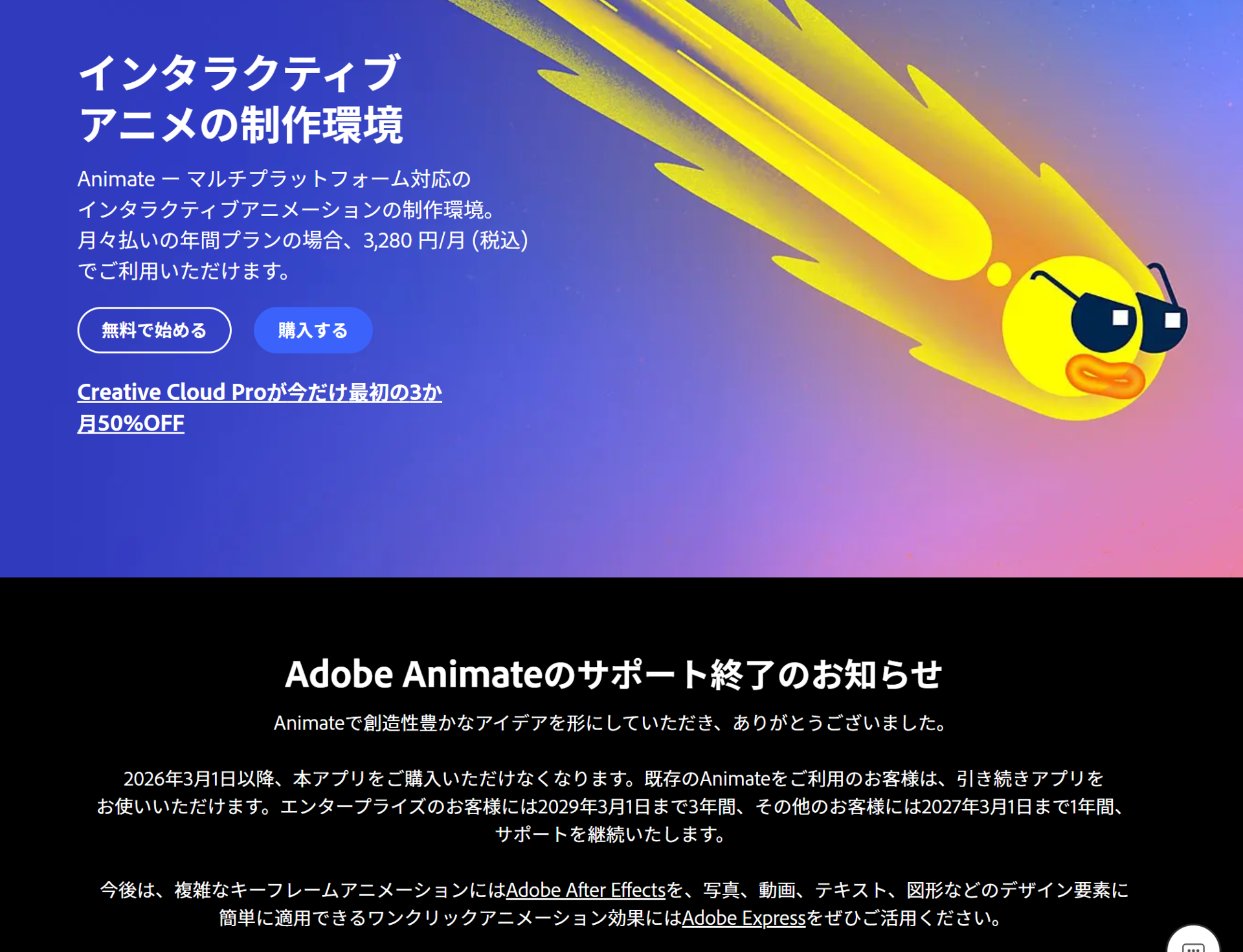
Adobe Animate Ends: A Shock for Japan’s Creative Community
If you’ve ever dreamed of diving into Japan’s vibrant world of animation or game design, you might have encountered tools like Adobe Animate (Adobe Animate), a cornerstone for creators worldwide. Well, brace yourself for some big news: on February 2, 2026, Adobe announced the discontinuation of this beloved 2D animation software. For learners of Japanese, this isn’t just a tech update—it’s a window into Japan’s creative culture and the passionate reactions of its users. Let’s unpack the story, explore the cultural impact, and pick up some authentic Japanese along the way.
The End of Adobe Animate: What Happened?
Adobe dropped a bombshell for the creative community by confirming that Adobe Animate (Adobe Animate), previously known as Adobe Flash Professional (Adobe Flash Professional), will no longer be sold after March 1, 2026. Personal user support will end by March 1, 2027, with enterprise support lingering until 2029. This software, famous for its 直感的 (chokkanteki, intuitive) interface, has been a go-to for crafting everything from web banners to TV anime and interactive games. Originally tied to Flash content, it adapted to modern formats like HTML5 after Flash’s security woes, but now Adobe is pulling the plug, citing over 25 years of impact and evolving user needs. They’re pointing users toward alternatives like After Effects (After Effects) and Adobe Express (Adobe Express), but the 移行 (ikou, transition) isn’t seamless for everyone.
In Japan, where animation and gaming are cultural pillars, the news has sparked a range of emotions. Some creators accept the 終了 (shuuryou, end) as inevitable, noting they haven’t used the ソフト (sofuto, software) in a while. Others, especially indie 開発者 (kaihatsusha, developers) and animators, are expressing serious 不満 (fuman, dissatisfaction). Online forums buzz with comments like, “I’m still actively using it—this is a huge problem!” Some even reference Adobe’s past, grumbling about the death of Flash Player in 2020 and questioning why Adobe acquired Macromedia only to “kill Flash twice.” These raw reactions give you a real taste of how Japanese speakers voice frustration while often maintaining a polite edge.
Cultural Context: Creativity as a Japanese Value
This news hits harder in Japan because of the country’s deep-rooted love for アニメーション (animeeshon, animation) and digital storytelling. Tools like Adobe Animate have powered countless projects, from small indie games to globally loved アニメ (anime). The backlash reflects a core Japanese value: ものづくり (monozukuri), the spirit of craftsmanship and creation. Whether it’s crafting traditional pottery or designing cutting-edge media, Japanese culture celebrates meticulous dedication to quality. So, when a tool integral to this process disappears, it feels like a blow to a creative legacy.
You’ll also notice a unique communication style in the online reactions. Many Japanese users balance restraint with critique, often using phrases like 仕方がない (shikata ga nai, it can’t be helped) to accept the inevitable, while others directly call out Adobe’s decisions. This mix of politeness and candor is something you’ll encounter often in Japanese discussions, especially around topics people care deeply about. As a learner, tuning into these nuances not only boosts your language skills but also helps you understand the “why” behind Japanese perspectives.
Learn Japanese from This Article
Let’s turn this news into a learning opportunity! Below, you’ll find key vocabulary, grammar patterns, and expressions pulled straight from the context of this story. These are words and structures you’d hear in real Japanese conversations about tech, creativity, and change.
Key Vocabulary
| Japanese | Romaji | Meaning |
|---|---|---|
| アニメーション | animeeshon | animation |
| ソフト | sofuto | software |