
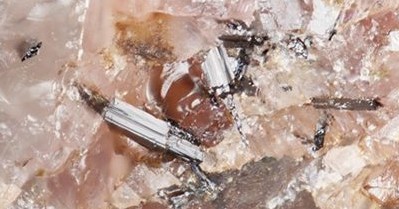
Japan's New Mineral Discovery: Rare Earths Unearthed in Gunma
Have you ever wondered what hidden treasures lie beneath the surface of Japan? On January 23, 2026, Yamaguchi University unveiled an incredible find that’s not just a win for science, but also a fascinating glimpse into Japan’s relentless spirit of discovery. They identified four brand-new minerals packed with rare earth elements, right in the heart of Gunma Prefecture. If you’re learning Japanese and curious about how language ties into real-world events like this, you’re in for a treat. Let’s dive into this groundbreaking news, uncover some cultural insights, and pick up authentic Japanese along the way—straight from the source, just like it’s taught in Japan.
A Groundbreaking Find at Mokurasawa Mine
Deep in Gunma Prefecture, at the 茂倉沢鉱山 (Mokurasawa Kouzan - Mokurasawa Mine), researchers from Yamaguchi University struck gold—or rather, rare earths. They discovered four previously unknown minerals, each brimming with elements like lanthanum and cerium, vital for modern tech like smartphones and electric vehicles. These minerals bear mouthfuls of names: セリウムバナジン赤坂簾石 (Seriumu Banajin Akasakurenseki), セリウム赤簾石 (Seriumu Akakurenseki), ランタン赤坂簾石 (Rantan Akasakurenseki), and ランタンバナジン赤坂簾石 (Rantan Banajin Akasakurenseki). The first got its official nod from the International Mineralogical Association in October 2024, with the others following in May 2025.
Found within quartz clusters alongside バラ輝石 (bara kiseki - rhodonite), these dark brown columnar crystals required cutting-edge chemical 解析 (kaiseki - analysis) to distinguish them. This precision showcases the meticulous nature of Japanese research, a trait you’ll often hear tied to the nation’s cultural values. Published in the Journal of Mineralogical and Petrological Sciences, this 発見 (hakken - discovery) isn’t just a feather in Japan’s cap—it’s a global contribution to mineralogy.
Cultural Context: Rare Earths and Japan’s Spirit of Inquiry
This isn’t just about shiny rocks. Rare earth elements, or レアアース (rea aasu), are the backbone of today’s technology, and Japan’s reliance on imports for these resources has long been a challenge. Finding them domestically in 群馬県 (Gunma-ken - Gunma Prefecture), a region better known for hot springs than mining, is a big deal. It reflects Japan’s deep-rooted 探求心 (tankyuushin - spirit of inquiry), a cultural drive to explore and innovate, even in the most unexpected places.
Even the naming of these 鉱物 (koubutsu - minerals), like 赤坂簾石 (Akasakurenseki), often carries meaning, possibly tied to a local landmark or a nod to a researcher. In Japan, science and culture are deeply connected, and as you learn the language, you’ll notice how context shapes everything—from mineral names to everyday expressions. This discovery is a reminder of how Japan blends tradition with forward-thinking innovation.
Learn Japanese from This Article
Let’s turn this exciting news into a learning opportunity. Here, you’ll find key vocabulary, grammar patterns, and expressions pulled straight from the context of this discovery. This is how Japanese is taught in Japan—rooted in real-life usage, not just textbook drills.
Key Vocabulary
| Japanese | Romaji | Meaning |
|---|---|---|
| レアアース | rea aasu | rare earth (elements) |
| 鉱物 | koubutsu | mineral |
| 発見 | hakken | discovery |
| 承認 | shounin | approval, recognition |
| 結晶 | kesshou | crystal |
| 解析 | kaiseki | analysis |
These words pop up often in scientific contexts, but they’re also useful in everyday Japanese when discussing new findings or technology. Try using 発見 (hakken) next time you “discover” something cool!
Grammar Spotlight
Let’s break down two useful grammar patterns that relate directly to this news story. These will help you describe events and locations like a native speaker.
〜と発表した (to happyou shita
- announced that ~) This pattern is used to report statements or announcements, often seen in news. It connects a quoted fact with the action of announcing.
- Structure: [Statement/Quote] + と + 発表した
- Example 1: 新しい鉱物を発見したと発表した。(Atarashii koubutsu o hakken shita to happyou shita.
- They announced that they discovered a new mineral.)
- Example 2: 承認を受けたと発表した。(Shounin o uketa to happyou shita.
- They announced that they received approval.)
- Use this when sharing formal news or updates, just like in Japanese media.
〜中にある (naka ni aru
- exists within ~) This describes something located inside or within a specific place or context.
- Structure: [Location] + の中に + ある
- Example 1: 茂倉沢鉱山の中にある結晶を見つけた。(Mokurasawa Kouzan no naka ni aru kesshou o mitsuketa.
- They found crystals within Mokurasawa Mine.)
- Example 2: 岩石の中にある鉱物を解析した。(Ganseki no naka ni aru koubutsu o kaiseki shita.
- They analyzed the minerals within the rocks.)
- This is great for talking about locations or hidden things, a common topic in science and everyday life.
Useful Expression
Here’s a bonus phrase you’ll hear in formal or academic settings:
- 承認を受ける (shounin o ukeru
- to receive approval/recognition)
Example: 新しい鉱物が国際機関から承認を受けた。(Atarashii koubutsu ga kokusai kikan kara shounin o uketa.
- The new mineral received approval from an international organization.) This is a polite way to discuss recognition, often used in professional contexts.
- to receive approval/recognition)
Example: 新しい鉱物が国際機関から承認を受けた。(Atarashii koubutsu ga kokusai kikan kara shounin o uketa.
Continue Learning
Ready to build on what you’ve learned? Check out these lessons to deepen your understanding of key Japanese grammar concepts used in this article:
- Wa vs. Ga: Emphasizing Importance in Sentences: Want to learn more about は? Check out our lesson on Wa vs. Ga: Emphasizing Importance in Sentences.
- O and Wo: Marking Objects Without Prepositions: To understand more about を, explore our O and Wo: Marking Objects Without Prepositions lesson.
- Ni, De, and E: Mapping Directions and Locations: Ready to dive deeper? Our lesson on Ni, De, and E: Mapping Directions and Locations will help you master these concepts.
Keep exploring, and you’ll be speaking Japanese with the same precision as these researchers approach their work!
これからもよろしくお願いします。 Kore kara mo yoroshiku onegaishimasu.