
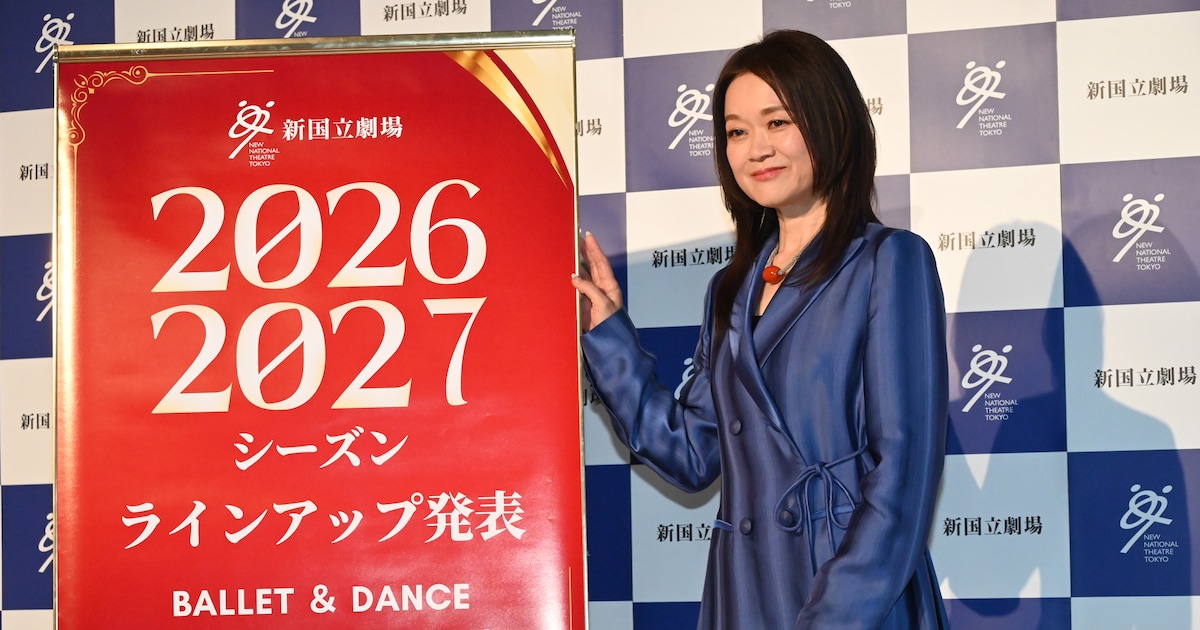
New National Theatre Tokyo Unveils 2026/2027 Season Lineup
Imagine yourself in the heart of Tokyo, surrounded by the electric buzz of creativity as artists reveal their plans for a season of breathtaking performances. On January 20, 2026, the 新国立劇場 (Shin Kokuritsu Gekijō - New National Theatre Tokyo) held a press conference that unveiled an inspiring lineup for the 2026/2027 season of dance and opera. For you, as a Japanese learner, this isn’t just news—it’s a window into the vibrant world of Japanese performing arts, where tradition meets innovation in a captivating dance of culture. Let’s dive into the highlights and see how this event can enrich your language journey.
Dance Lineup: A Fusion of Timeless and Modern
Leading the dance announcements was Artistic Director of Dance, 吉田都 (Yoshida Miyako), who shared a lineup that promises to mesmerize audiences. A standout piece is the ballet adaptation of Charlie Chaplin’s 1931 film "City Lights," with choreography by Alastair Marriott. This marks a second collaboration between Yoshida and Marriott after their acclaimed production of "Giselle," which toured London in 2023. Yoshida praised Marriott’s 奔走 (honsō - frantic efforts) in securing the rights to adapt this cinematic gem, believing it will become a cherished work for the 新国立劇場バレエ団 (Shin Kokuritsu Gekijō Baree-dan - New National Theatre Ballet). She also noted how international performances have built the troupe’s 自信 (jishin - confidence), a growth you can sense in their evolving repertoire.
The season introduces fresh works too, including a piece by 小㞍健太 (Kojiri Kenta), showcasing dancers like Rei Watanabe alongside the theater’s talent. Yoshida admired Kojiri’s mentorship, helping younger dancers expand their 表現 (hyōgen - artistic expression) through diverse 振付 (furitsuke - choreography). Another highlight is a commissioned work by 伊藤郁女 (Ito Ikume) titled 喧嘩(仲直り) (Kenka (Nakanaori) - "Fight (Reconciliation)"), a small-scale piece for five dancers. Yoshida chuckled during planning as Ito insisted on including "reconciliation" in the title to balance the conflict—a lighthearted glimpse into the creative process.
Classics like "Romeo and Juliet," "Don Quixote," and a re-staging of "The Nutcracker" round out the season, alongside regional tours of "Giselle." The ballet "Aladdin," previously streamed digitally, even reached over 700,000 viewers worldwide, showing the global appetite for Japanese 舞踊 (buyō - artistic dance). With the theater’s 30th anniversary nearing, Yoshida’s vision challenges both young and veteran dancers, highlighting the depth of Japan’s ballet scene.
Opera Highlights: Italian Masterpieces Take Center Stage
Switching to opera, Artistic Director 大野和士 (Ono Kazushi), joining via online stream from abroad, revealed a season rooted in Italian drama. It opens with Gioachino Rossini’s rare opera buffa イタリアのトルコ人 (Itaria no Toruko-jin - "The Turk in Italy"), featuring a "photonovel" staging with photographic panels for enhanced storytelling. Ono described its quirky structure, evolving from duets to a dynamic finale—a feast for the eyes and ears.
The lineup also includes Benjamin Britten’s "Peter Grimes," conducted by Ono, portraying an outcast fisherman’s struggles in a stark coastal village, with video elements deepening the emotional impact. Closing the season is Giuseppe Verdi’s マクベス (Makubesu - "Macbeth"), a new production directed by Lorenzo Mariani. Ono called it a profound tragedy exploring ambition and paranoia, a pivotal early work in Verdi’s career. Framing the season with Italian operas as “curtains” at the start and end, Ono celebrates Italy’s rich operatic heritage right from a Tokyo 劇場 (gekijō - theater).
Cultural Context: Why Performing Arts Matter in Japan
If you’re new to Japanese culture, the New National Theatre Tokyo is Japan’s leading venue for performing arts, opened in 1997 in Shinjuku as a cultural cornerstone for opera, ballet, and more. It’s a space where traditional Japanese aesthetics often blend with global influences, reflecting Japan’s unique balance of heritage and modernity. Words like バレエ団 (baree-dan - ballet company) and オペラ (opera - opera) are borrowed from Western languages but are now woven into everyday Japanese, showing how art crosses borders.
Events like this press conference also reveal Japanese values like 調和 (chōwa - harmony) and meticulous preparation. The care behind securing rights, mentoring dancers, and crafting productions mirrors a broader societal respect for excellence and dedication. As a learner, engaging with such stories isn’t just about picking up new words—it’s about feeling the pulse of contemporary Japanese culture through its artistic heartbeat.
Learn Japanese from This Article
Ready to turn this cultural dive into a language lesson? Let’s break down some key vocabulary and grammar from the world of Japanese performing arts. These are terms and structures you’ll encounter not just in theater but in everyday conversations about creativity and effort.
Essential Vocabulary
| Japanese | Romaji | Meaning |
|---|---|---|
| 劇場 | gekijō | theater |
| 舞踊 | buyō | dance (often traditional or artistic) |
| バレエ団 | baree-dan | ballet troupe/company |
| 振付 | furitsuke | choreography |
| 奔走 | honsō | running around, frantic efforts |
| 自信 | jishin | confidence |
| 表現 | hyōgen | expression (artistic or emotional) |
Grammar Spotlight: 〜のではないか and 〜てきた
Let’s look at two useful grammar patterns that can help you express opinions and describe development—both of which tie into how Japanese people discuss art and progress.
〜のではないか (~no dewa nai ka
- Isn’t it the case that...?, I think that...) This structure is used to express speculation or a soft opinion, often inviting agreement or reflection. It’s perfect for discussing impressions of performances or cultural events. *Structure: Verb (plain form) / Noun + ではないか Examples:
- このバレエは素晴らしいのではないか。(Kono baree wa subarashii no dewa nai ka.
- Isn’t this ballet amazing?)
- 彼の表現力は特別ではないか。(Kare no hyōgen-ryoku wa tokubetsu dewa nai ka.
- Isn’t his expressive power special?)
- 新しい振付は難しいのではないか。(Atarashii furitsuke wa muzukashii no dewa nai ka.
- Isn’t the new choreography challenging?) Use this when you want to share thoughts without sounding too assertive—very Japanese in its polite nuance!
〜てきた (~te kita
- has been doing, indicates a process over time) This pattern describes something that has developed or continued up to now, often used to talk about growth or change, like a theater troupe’s progress. *Structure: Verb (te-form) + きた Examples:
- バレエ団は成長してきた。(Baree-dan wa seichō shite kita.
- The ballet troupe has been growing.)
- 彼らは自信を持って踊ってきた。(Karera wa jishin o motte odotte kita.
- They have been dancing with confidence.)
- 新しい表現を学んできた。(Atarashii hyōgen o manande kita.
- They have been learning new expressions.) Use this to describe ongoing efforts or evolution, a common theme in discussions about art and skill in Japan.
Useful Expression
Here’s a phrase you might hear around cultural events or creative projects: 頑張ってきました (Ganbatte kimashita - I/We have been working hard up to now.) It combines the grammar point above with 頑張る (ganbaru - to do one’s best), reflecting persistence—a value deeply ingrained in Japanese culture, especially in the arts. Say this to acknowledge effort over time, whether your own or someone else’s.
Continue Learning
Want to deepen your Japanese skills further? Here are some lessons from "Japanese from Japan" to help you build on what you’ve learned today:
- To understand more about に, explore our Ni, De, and E: Mapping Directions and Locations lesson.
- Working on your reading skills? Our Chinese Influence on Japanese: Kanji and Borrowed Vocabulary lesson is a great next step.
- To understand more about vocabulary, explore our Basic Vocabulary Building: Embracing Words Without Latin Ties lesson.
As you continue your journey with Japanese, remember that every story, every performance, and every word brings you closer to the heart of Japan. これからもよろしくお願いします。 Kore kara mo yoroshiku onegaishimasu.