
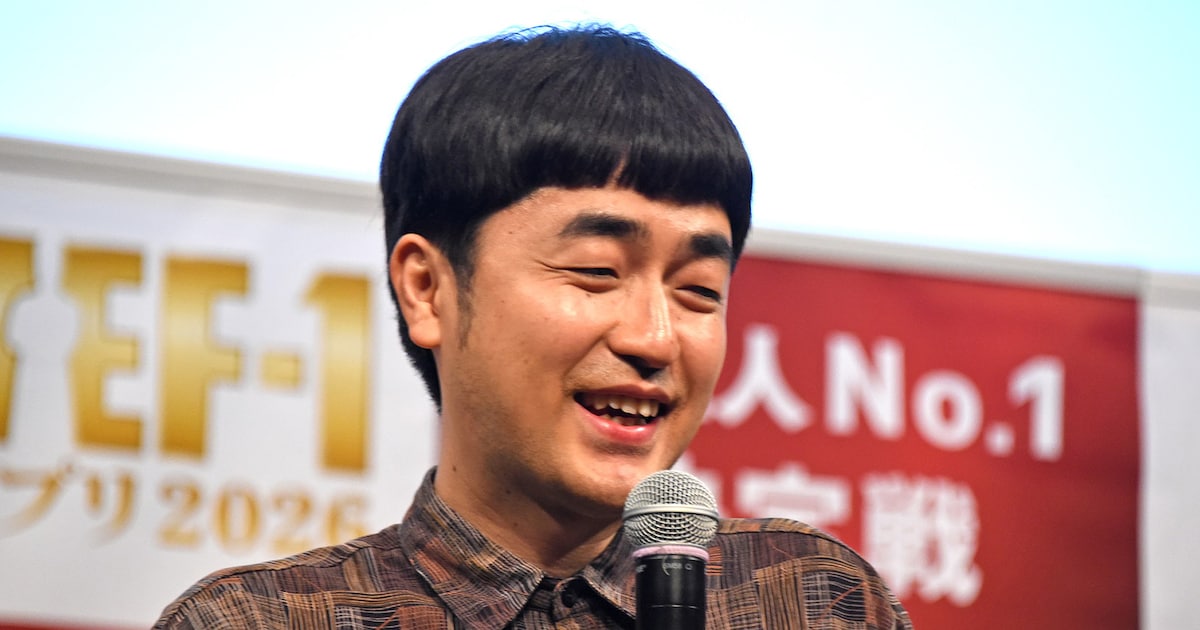
Comedian Takurou Akagi Shocks Fans with Marriage Reveal on Live TV
Imagine sitting in a buzzing Tokyo TV studio, the crowd hanging on every word as a beloved comedian hesitates before dropping a life-changing announcement. If you’ve ever dreamed of experiencing Japanese entertainment firsthand, this moment from January 20, 2026, is a perfect glimpse into the drama and charm of variety shows. On the hit program 行列のできる法律相談所 (Gyouretsu no Dekiru Houritsu Soudanjou - "The Legal Consultation Office You Can Line Up For"), comedian たくろう赤木 (Takurou Akagi), one half of the comedy duo たくろう (Takurou), revealed he’s been married since August of last year. Let’s dive into this heartwarming story and uncover some authentic Japanese language lessons along the way!
The Surprise Announcement That Stole the Show
During a 2-hour special of the revived Nippon TV show, host 東野幸治 (Higashino Kouji) put Akagi on the spot with a direct question about his marital status. After a sheepish pause and a classic “ano…” (a filler word meaning “um…”), Akagi confessed, “I got married.” The studio burst into cheers, and even his comedy partner, きむらバンド (Kimura Bando), confirmed this was the first public 報告 (houkoku - announcement). Akagi later shared that he’d been waiting for the right タイミング (taimingu - timing) to reveal his 結婚 (kekkon - marriage), and with the topic coming up naturally, he decided it was now or never. Talk about spontaneity!
What made the moment even more endearing was a little story from the M-1グランプリ2025 (M-1 Gurandopuri 2025), Japan’s biggest stand-up comedy competition. Akagi’s comedy partner spilled that Akagi’s wife was in the audience at the 会場 (kaijou - venue) during the event, having won a ticket through sheer 強運 (kyouun - great luck) in a lottery. Akagi admitted that during his performance, he caught sight of her chatting with someone nearby, momentarily throwing him off. It’s a relatable peek into the balance between personal life and public fame.
A Stage Steeped in History
The show itself, hosted by a seasoned 司会 (shikai - host) like Higashino, is a cultural icon. Originally launched in 2002 as 行列のできる法律相談所, it mixed celebrity guests, legal advice, and humor, becoming a household name. Though it was renamed and concluded its regular run last year, this special brought back the original “legal” title and even featured Akagi’s duo in a comedy skit with ミャクミャク (Myakumyaku), the quirky mascot of the 2025 Osaka-Kansai Expo. If you’re learning Japanese, streaming this episode on TVer (a Japanese platform) is a goldmine for real-life language and variety-show vibes.
Cultural Context: Why This Moment Matters
If you’ve ever wondered why a marriage announcement on TV is such a big deal, it’s tied to Japanese entertainment culture. Unlike Western talk shows with polished, scripted interviews, Japanese variety shows thrive on unscripted moments and group interactions. Personal revelations like Akagi’s are rare because celebrities often keep their private lives under wraps until a public moment feels right. When they do share, it’s a gesture of trust with fans, sparking waves of support online.
Then there’s the M-1グランプリ, often called the “Super Bowl of Japanese comedy.” This annual event at a packed 会場 (kaijou - venue) crowns the best comedy duo, and just getting to perform is a career-defining honor. For Akagi’s wife to be there during his 観覧 (kanran - attendance as an audience member) shows the quiet support behind his success—a value deeply rooted in Japanese ideals of family and perseverance. Watching M-1 clips is also a fantastic way to hear fast-paced, casual Japanese and pick up slang or humor you won’t find in textbooks.
Learn Japanese from This Article
Let’s turn this entertaining story into a learning opportunity! Here at “Japanese from Japan,” we believe in teaching the language the way it’s lived and spoken by natives. Below, you’ll find key vocabulary, grammar patterns, and expressions pulled straight from this moment in pop culture.
Key Vocabulary
| Japanese | Romaji | Meaning |
|---|---|---|
| 結婚 | kekkon | marriage, getting married |
| 報告 | houkoku | report, announcement |
| 会場 | kaijou | venue, location (of an event) |
| 観覧 | kanran | watching (as an audience), attendance |
| 強運 | kyouun | great luck, good fortune |
| 司会 | shikai | host, master of ceremonies |
| タイミング | taimingu | timing |
Grammar Spotlight: 〜ていた (Past Ongoing Action or State)
In Japanese, the form 〜ていた is used to describe an action or state that was ongoing in the past. It’s like saying “was doing” or “had been doing” in English. You’ll often hear this in storytelling, like Akagi’s marriage reveal, to set the context of something that was true before a specific moment.
- Structure: Verb (て-form) + いた
- Examples:
- 結婚していた。(Kekkon shiteita.
- I had been married / I was married.)
- Akagi used this to explain his marriage happened before the announcement.
- I had been married / I was married.)
- 待っていた。(Matteita.
- I was waiting.)
- He might have said this about waiting for the right timing.
- I was waiting.)
- 見ていた。(Miteita.
- I was watching.)
- This could describe him glancing at his wife in the audience.
- I was watching.)
- 結婚していた。(Kekkon shiteita.
Use this form when reflecting on past situations or ongoing states—it’s a natural way to share backstory in conversations.
Grammar Spotlight: 〜と言っていた (Said That ~, Was Saying That ~)
Another useful pattern is 〜と言っていた, which means “said that ~” or “was saying that ~.” It’s a way to report what someone else said, often used in casual storytelling or news-like contexts, such as Akagi’s partner confirming the announcement.
- Structure: Quote + と言っていた
- Examples:
- 結婚したと言っていた。(Kekkon shita to itteita.
- He was saying that he got married.)
- Kimura might have used this to back up Akagi’s news.
- He was saying that he got married.)
- 奥さんがいたと言っていた。(Okusan ga ita to itteita.
- He was saying his wife was there.)
- Reflecting on the M-1 audience moment.
- He was saying his wife was there.)
- タイミングを待っていたと言っていた。(Taimingu o matteita to itteita.
- He was saying he was waiting for the right timing.)
- 結婚したと言っていた。(Kekkon shita to itteita.
This pattern is perfect for relaying information or gossip in a natural, conversational tone—just like on a variety show!
Useful Expression: “Ano…”
You might have noticed Akagi’s hesitant “ano…” before his big reveal. This little word, あのう (anou), is a super common filler in Japanese, akin to “um…” or “well…” in English. It’s used to buy time when thinking or to soften a statement. You’ll hear it everywhere in real conversations, so don’t be afraid to toss it in when you’re searching for the right words!
Continue Learning
Ready to take your Japanese to the next level? Here are some lessons from “Japanese from Japan” to deepen your understanding of concepts tied to this story:
- Wa vs. Ga: Emphasizing Importance in Sentences: Ready to dive deeper? Our lesson on Wa vs. Ga: Emphasizing Importance in Sentences will help you master these concepts.
- Ni, De, and E: Mapping Directions and Locations: Want to learn more about に? Check out our lesson on Ni, De, and E: Mapping Directions and Locations.
- Time and Dates: Tense-Free Expressions: To understand more about time, explore our Time and Dates: Tense-Free Expressions lesson.
Learning Japanese the way it’s taught in Japan means connecting with real moments like Akagi’s heartfelt announcement. Keep practicing, and you’ll be chatting about variety shows and personal news like a native in no time!
これからもよろしくお願いします。 Kore kara mo yoroshiku onegaishimasu.