

A Demon Army’s Year-End Party: Dive into Japanese Bounenkai Culture
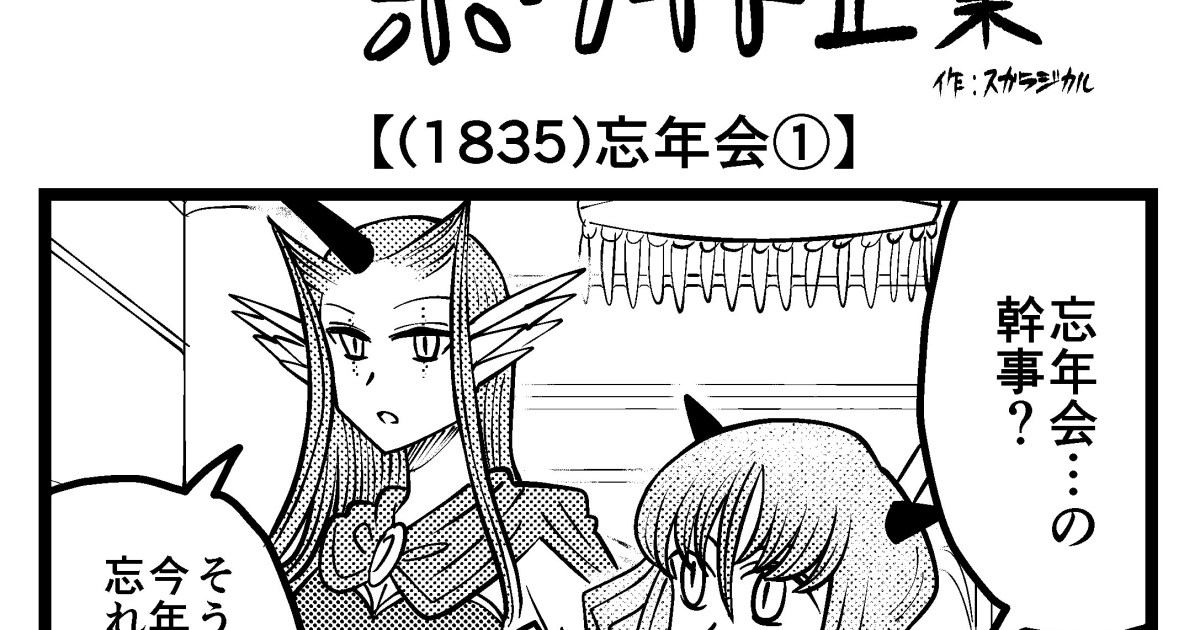
Have you ever wondered what a Japanese office party looks like, even in a fictional world of demons and magic? If so, you’re in for a treat! Today, we’re stepping into the hilarious world of the manga series 魔王軍はホワイト企業 (Maou-gun wa Howaito Kigyou, "The Demon King's Army is a White Company") by Sugara Jikaru. In its 1835th episode, titled 忘年会① (Bounenkai①, "Year-End Party Part 1"), featured on Rocket News, we get a quirky and surprisingly relatable look at Japanese year-end celebrations—demon style! Let’s explore this unique blend of workplace traditions and fantasy humor while picking up some authentic Japanese along the way.
A Demon Army with Office Party Drama
Released on December 11, 2025, this episode takes us into the lives of the Demon King’s army, a group of otherworldly beings who operate under the rules of a modern Japanese ホワイト企業 (howaito kigyou, "white company")—a term for workplaces with fair treatment and good work-life balance. The spotlight of this installment is the 忘年会 (bounenkai), a traditional year-end party where colleagues gather to "forget the year" and celebrate their hard work. Even in a fantasy setting, the characters deal with the same awkward small talk, drinking etiquette, and group dynamics you’d find at any Japanese 職場 (shokuba, "workplace"). The humor shines through as these demons navigate corporate traditions, like toasting with a loud 乾杯 (kanpai, "cheers"), proving that even in a magical world, office life is hilariously universal.
Cultural Context: What is a Bounenkai?
If you’re new to Japanese customs, a 忘年会 (bounenkai) might seem like just another party, but it holds deep cultural significance. Typically held in December, these gatherings are a cornerstone of Japanese social and work life, designed to strengthen bonds among 同僚 (douryou, "colleagues") and reflect on the year’s challenges and successes. The word itself breaks down into "forget" (忘 bou) and "year" (年 nen), symbolizing a chance to let go of the past year’s troubles and start anew. At a typical bounenkai, often overlapping with a 飲み会 (nomikai, "drinking party"), you’ll find plenty of food, drinks like beer or sake, toasts, and sometimes games or karaoke. For many Japanese workers, attending isn’t just optional—it’s a way to show team spirit. This manga episode playfully highlights the unspoken rules of these events, like the pressure to pour drinks for your boss or laugh at their jokes, giving you a glimpse into the nuances of Japanese social hierarchy, even among demons led by a 魔王 (maou, "demon king").
Learn Japanese from This Article
Ready to pick up some authentic Japanese from this demon-filled office party? Let’s break down key vocabulary and grammar patterns inspired by the story. These are words and structures you’ll hear in real Japanese conversations, especially around the workplace or social gatherings.
Essential Vocabulary
| Japanese | Romaji | Meaning |
|---|---|---|
| 忘年会 | bounenkai | year-end party |
| 魔王 | maou | demon king |
| ホワイト企業 | howaito kigyou | white company (good working conditions) |
| 同僚 | douryou | colleague |
| 飲み会 | nomikai | drinking party |
| 職場 | shokuba | workplace |
| 乾杯 | kanpai | cheers/toast |
These words are your gateway to understanding Japanese workplace culture. Imagine walking into a 飲み会 (nomikai) and confidently raising your glass with a hearty 乾杯 (kanpai)—you’ll fit right in!
Grammar Spotlight: Expressing Desires and Trying Things
Let’s look at two useful grammar patterns that can help you talk about wanting to join a party or trying something new, just like the characters in this manga.
1. 〜たい: Want to (do something)
This pattern is used to express a desire to do something. Attach 〜たい to the stem form of a verb (drop the ます from the polite form).
- Structure: Verb (stem form) + たい
- Example Sentences:
- 忘年会に行きたいです。 (Bounenkai ni ikitai desu.) - I want to go to a year-end party.
- 飲み会で乾杯したいです。 (Nomikai de kanpai shitai desu.) - I want to toast at a drinking party.
- 同僚と話したいです。 (Douryou to hanashitai desu.) - I want to talk with my colleagues.
Use this when sharing your personal desires or plans, especially in casual or polite settings. It’s a great way to express enthusiasm for joining events like a 忘年会 (bounenkai).
2. 〜てみる: Try doing something
This pattern means “to try doing something” and is often used when experiencing something for the first time. Combine the て-form of a verb with みる (to see/look).
- Structure: Verb (て-form) + みる
- Example Sentences:
- 忘年会に参加してみます。 (Bounenkai ni sanka shite mimasu.) - I’ll try participating in a year-end party.
- 職場で乾杯してみたいです。 (Shokuba de kanpai shite mitai desu.) - I want to try toasting at the workplace.
- 同僚と飲み会に行ってみます。 (Douryou to nomikai ni itte mimasu.) - I’ll try going to a drinking party with my colleagues.
This is perfect for when you’re stepping into new cultural experiences, like attending your first Japanese office party. It shows curiosity and openness to learning—key traits for mastering Japanese authentically.
Useful Expression
Here’s a bonus phrase you’ll hear at any Japanese gathering:
- 乾杯! (Kanpai!) - Cheers! This is the go-to toast at a 飲み会 (nomikai) or 忘年会 (bounenkai). Say it with energy, and make sure to clink glasses with everyone around you—it’s all about building those connections!
Closing Thoughts
Exploring Japanese culture through manga like 魔王軍はホワイト企業 (Maou-gun wa Howaito Kigyou) is a fun and authentic way to learn. Whether it’s understanding the importance of a 忘年会 (bounenkai) or practicing how to express your desire to join one with 〜たい, you’re getting closer to speaking and thinking like a native. Keep diving into these cultural quirks, and you’ll find that learning Japanese becomes as engaging as a demon army’s office party!
これからもよろしくお願いします。 Kore kara mo yoroshiku onegaishimasu.